Roof Replacement in El Dorado Hills
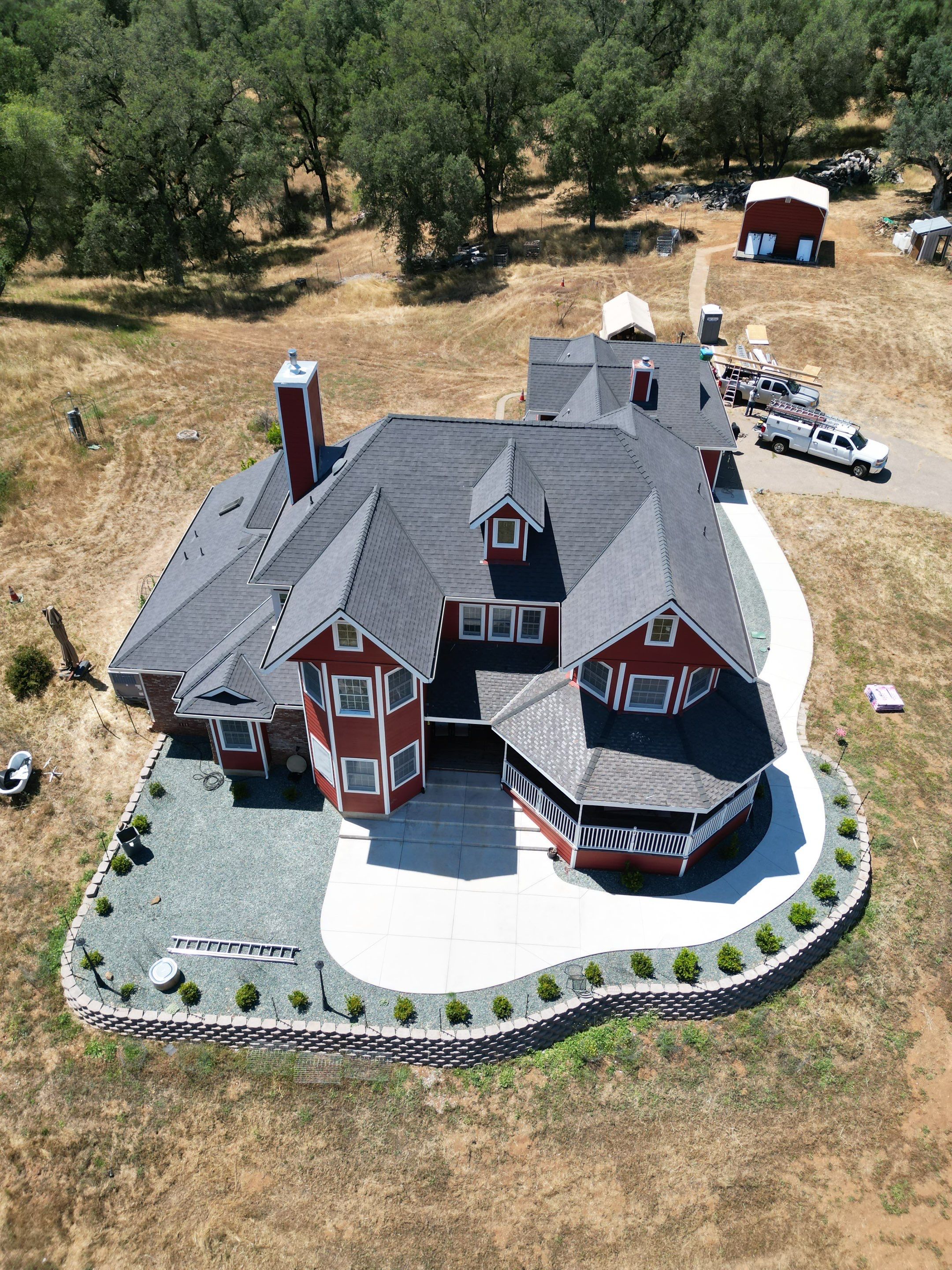
With a median construction year of 2002 and more than a third of homes built between 2000 and 2009, a large share of El Dorado Hills roofs are now at or past the twenty-year mark. That is the point where original composition shingle systems begin shedding granules, where valley metal starts to corrode at the fold, and where the original underlayment no longer offers meaningful secondary protection during a sustained winter storm.
Our replacement process begins with a full tear-off down to the decking so we can document any dry rot, delamination, or fastener failure before the new system goes on. We photograph the deck, share the findings with you, and only then install new underlayment, flashing, ventilation, and Class A fire-rated field material. Because most of the community falls under CAL FIRE hazard severity mapping, we confirm the assembly satisfies California Building Code Chapter 7A requirements as part of the specification rather than treating it as an afterthought.
As an Owens Corning Preferred contractor operating under CSLB License #1069901, we can register qualifying replacements for extended manufacturer warranty coverage, and all permitting runs through the El Dorado County Building Division on your behalf.
Explore our roof replacement services →Tile Roofing in El Dorado Hills
El Dorado Hills has one of the highest concentrations of concrete and clay tile roofing in the greater Sacramento region. The Mediterranean and Tuscan-influenced elevations that define Serrano, The Promontory, Blackstone, Four Seasons, and much of Highland Hills were designed around tile from the outset, and in many subdivisions the tile profile is written into the neighborhood's architectural guidelines. That makes tile work here a matching problem as much as a roofing problem: pulling the wrong profile or the wrong color blend on a repair is immediately visible from the street and can create a compliance issue with the community association.
The important thing most homeowners here are not told is that the tile itself is rarely what fails. Concrete tile routinely lasts fifty years or more, while the underlayment beneath it is typically rated for twenty to thirty. On a home built in the early 2000s, the tile can look essentially new while the felt underneath has gone brittle, cracked at the fastener penetrations, and stopped shedding water into the gutters. Leaks show up at valleys, at wall-to-roof transitions, and around chimneys long before anything is visibly wrong with the field of the roof.
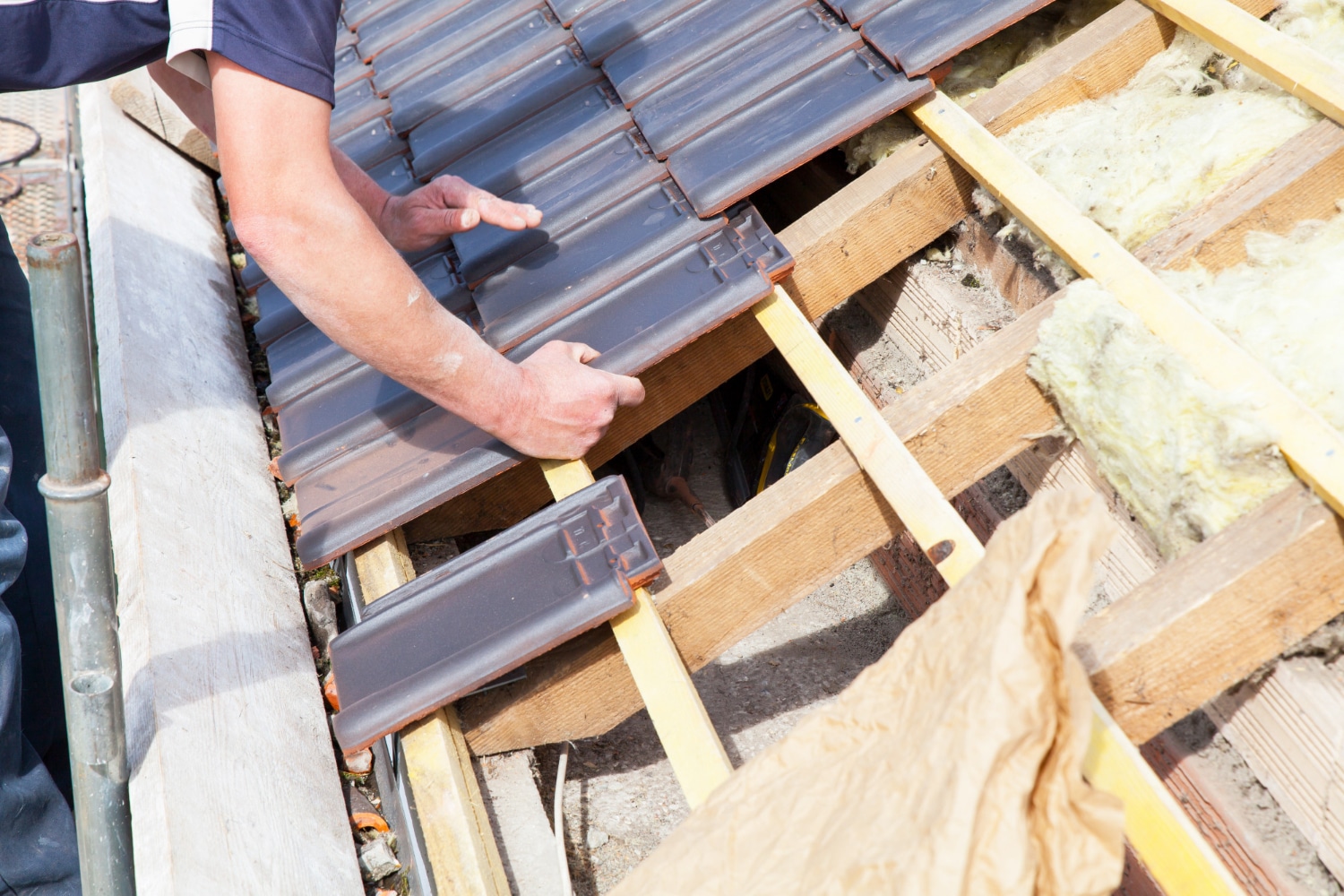
That is why the most common tile project we perform in El Dorado Hills is a lift-and-relay rather than a full replacement. We carefully remove and stack the existing tile, strip and replace the underlayment with a high-temperature product suited to foothill summer heat, rebuild the valley metal and all flashings, and then reset your original tile. You keep the exact appearance your street and your HOA expect, at a materially lower cost than a full tile replacement, and the waterproofing layer that actually does the work is reset to zero. Where tiles have broken from foot traffic, satellite installs, or falling limbs, we source matching replacements rather than substituting a near-miss profile.
Tile also carries structural and fire considerations specific to this area. Concrete and clay tile are Class A fire-rated, which is a real advantage in the wildland-urban interface areas along the eastern and southern edges of the community, but the assembly only performs as intended when the bird stops, eave closures, and vent openings are detailed correctly to keep embers out of the batten space. We inspect and correct those details on every tile job. On older foothill homes considering a change from composition to tile, we verify the framing can carry the added dead load before quoting the work.
Explore our tile roofing contractor services →Roof Repair and Leak Diagnosis
Most El Dorado Hills leaks are not field failures. They start at a penetration or a transition: a cracked pipe boot, a failed skylight curb, separated valley metal, or stucco-to-roof flashing that was never counter-flashed correctly when the home was built. Because the community's rainfall is concentrated into a handful of heavy winter events, homeowners often discover the problem during the first real storm of the season, when the roof has been dry for six months and the interior stain appears overnight.
We diagnose before we quote. That means tracing the water path from the interior evidence back up the slope, inspecting the suspected area directly, and testing where the source is ambiguous rather than replacing components on a guess. On multi-level Serrano and Promontory homes with steep pitches and multiple valleys, this matters, because the visible stain is frequently several feet downslope from the actual entry point.
Repairs are scoped honestly. If a targeted repair will get you several more seasons, we will say so and do the repair. If the roof is at the end of its service life and a patch is simply buying a few months, we will show you the deck and underlayment condition that led us to that conclusion so the decision is yours to make with real information.
Explore our roof repair services →Roof Inspections and Maintenance
A roof inspection in El Dorado Hills is most valuable at two moments: before a real estate transaction, and at the fifteen-to-twenty-year mark on the original system. In both cases the question is the same: how much service life is actually left, and what needs attention now to protect it.
Our inspection covers the field material, all flashings and penetrations, valley condition, ridge and eave ventilation, gutter and downspout function, and the visible condition of the decking and attic underside where access allows. On tile roofs we specifically evaluate underlayment condition rather than judging the roof by the tile, because that is where the remaining life is determined.
You receive a documented findings report with photographs, a clear statement of what is urgent versus what can be monitored, and a written scope for any recommended work. Seasonal maintenance (clearing debris from valleys, keeping gutters and downspouts flowing before winter, and resealing exposed fasteners) costs very little compared to the interior damage a single blocked valley can cause during a foothill downpour.
Explore our roof inspection services →Metal Roofing for Foothill Properties
Metal roofing has become a serious option for El Dorado Hills homeowners, particularly on properties in higher fire hazard severity zones and on custom homes where the owner wants a fifty-year assembly rather than a twenty-five-year one. Standing seam systems are Class A fire-rated when installed over an approved deck assembly, shed pine needles and oak debris far more readily than composition, and hold up well against the intense summer ultraviolet exposure that degrades asphalt granules in this climate.
The two questions that decide whether metal is right for a given home here are appearance and detailing. Some neighborhoods' architectural guidelines restrict panel profiles and finishes, so we confirm what is permitted before recommending a system. Detailing matters because metal expands and contracts significantly across a foothill temperature range that can swing sixty degrees in a single day. Concealed fastener standing seam allows that movement, exposed-fastener panels resist it and eventually back out their screws.
We walk homeowners through the honest trade-off: higher installed cost against longer service life, better fire and debris performance, and lower long-term maintenance.
Explore our metal roofing contractor services →Gutters, Drainage, and Attic Ventilation
Roof systems in El Dorado Hills fail at the edges more often than in the middle. Oak and pine debris fills gutters through the fall, the first heavy rain overwhelms the blocked run, and water backs up under the eave, saturating fascia and rotting the first few inches of decking. On multi-level homes, an upper-level downspout discharging directly onto a lower roof plane will wear a hole through the field material in a few seasons if it is not redirected.
We install and repair seamless gutter systems sized for the actual roof area draining into them, correct downspout terminations so water is carried away from the foundation, and address the eave and fascia damage that blocked drainage has already caused.
Ventilation is the other half of this. Foothill attic temperatures during a July heat event cook shingles from below and shorten their rated life considerably. Balanced intake at the eaves and exhaust at the ridge lowers attic temperature, reduces winter condensation, and protects the manufacturer warranty, which in most cases requires the ventilation ratio to be met.
Explore our gutter installation services →