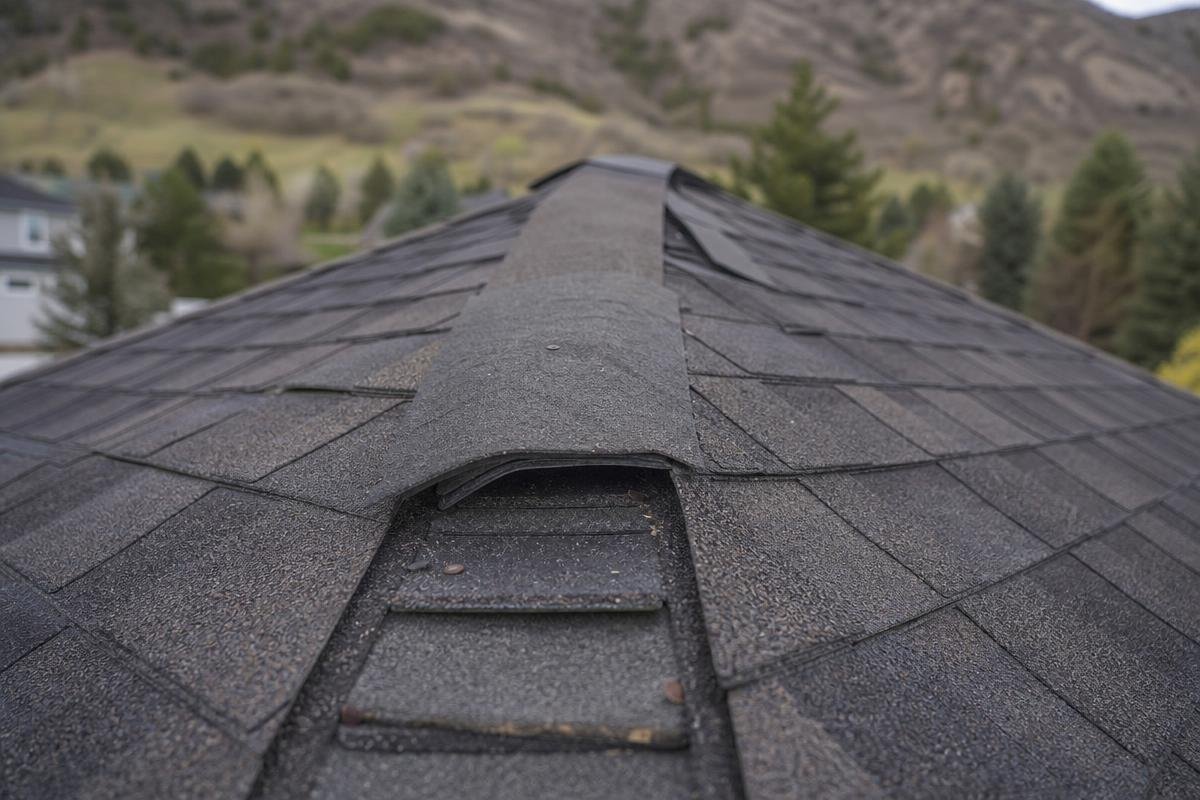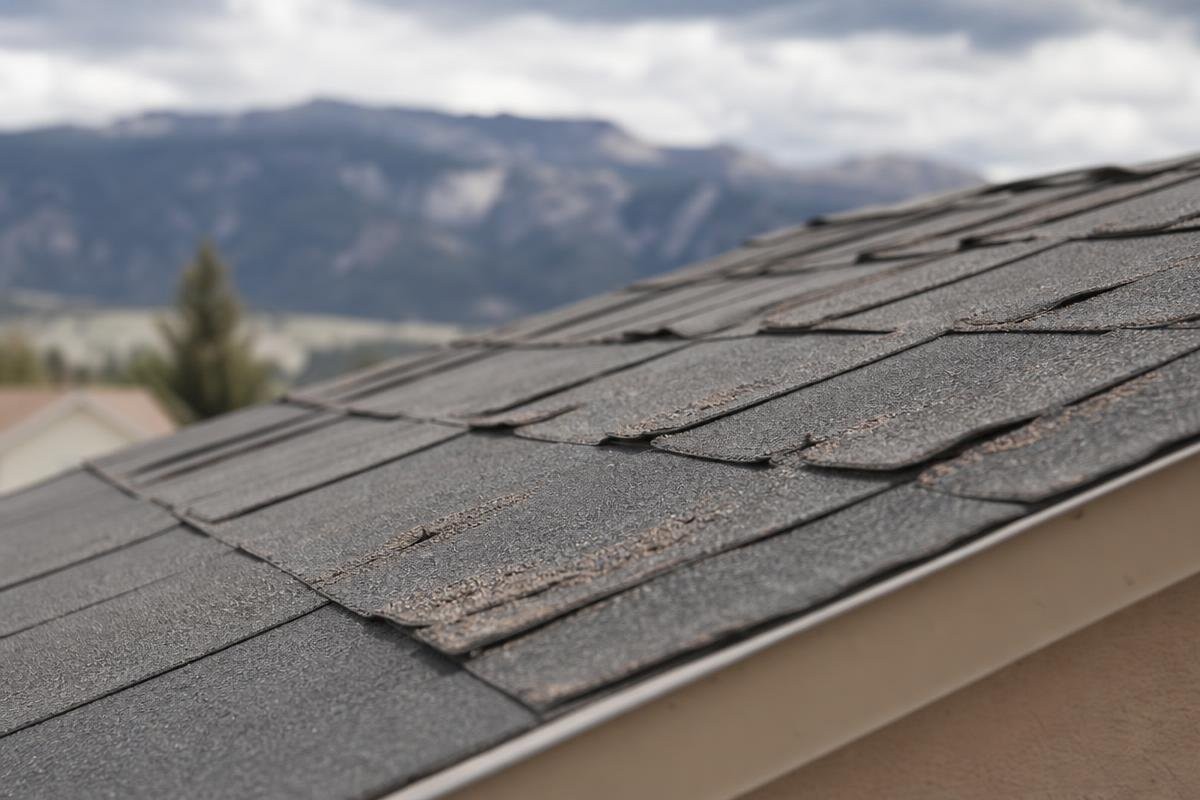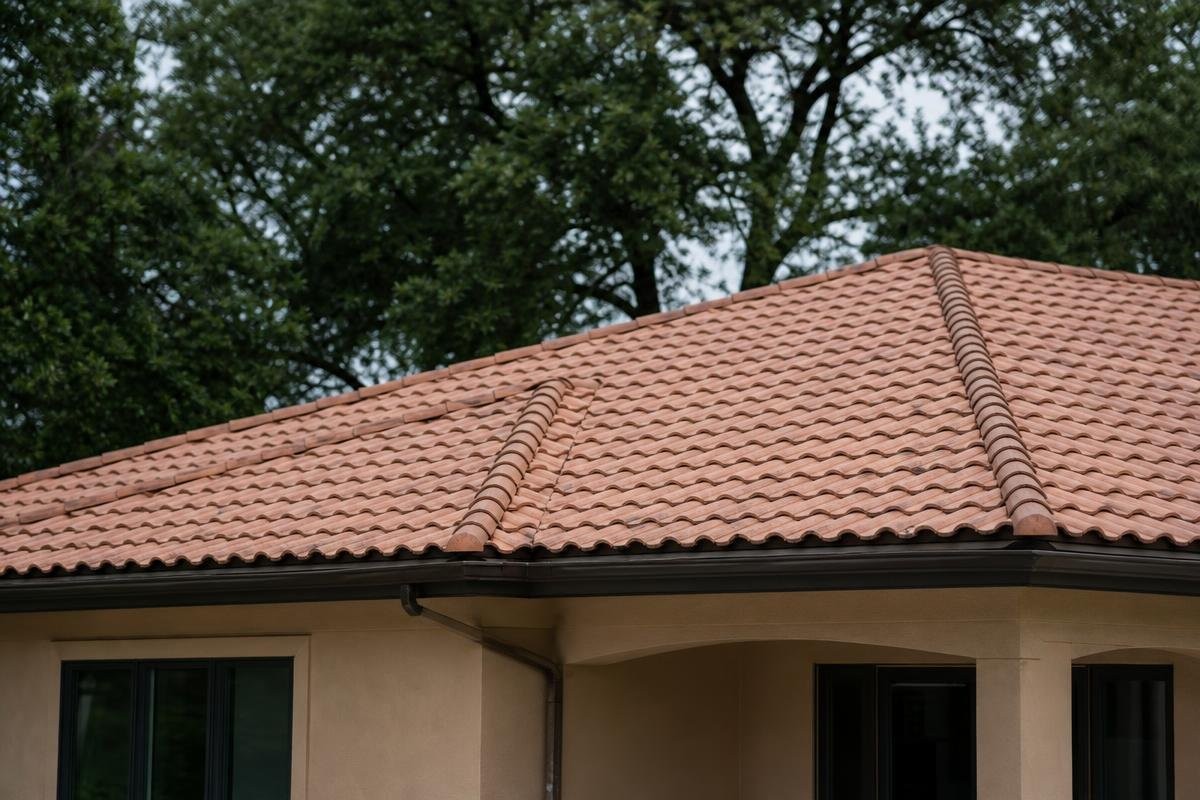
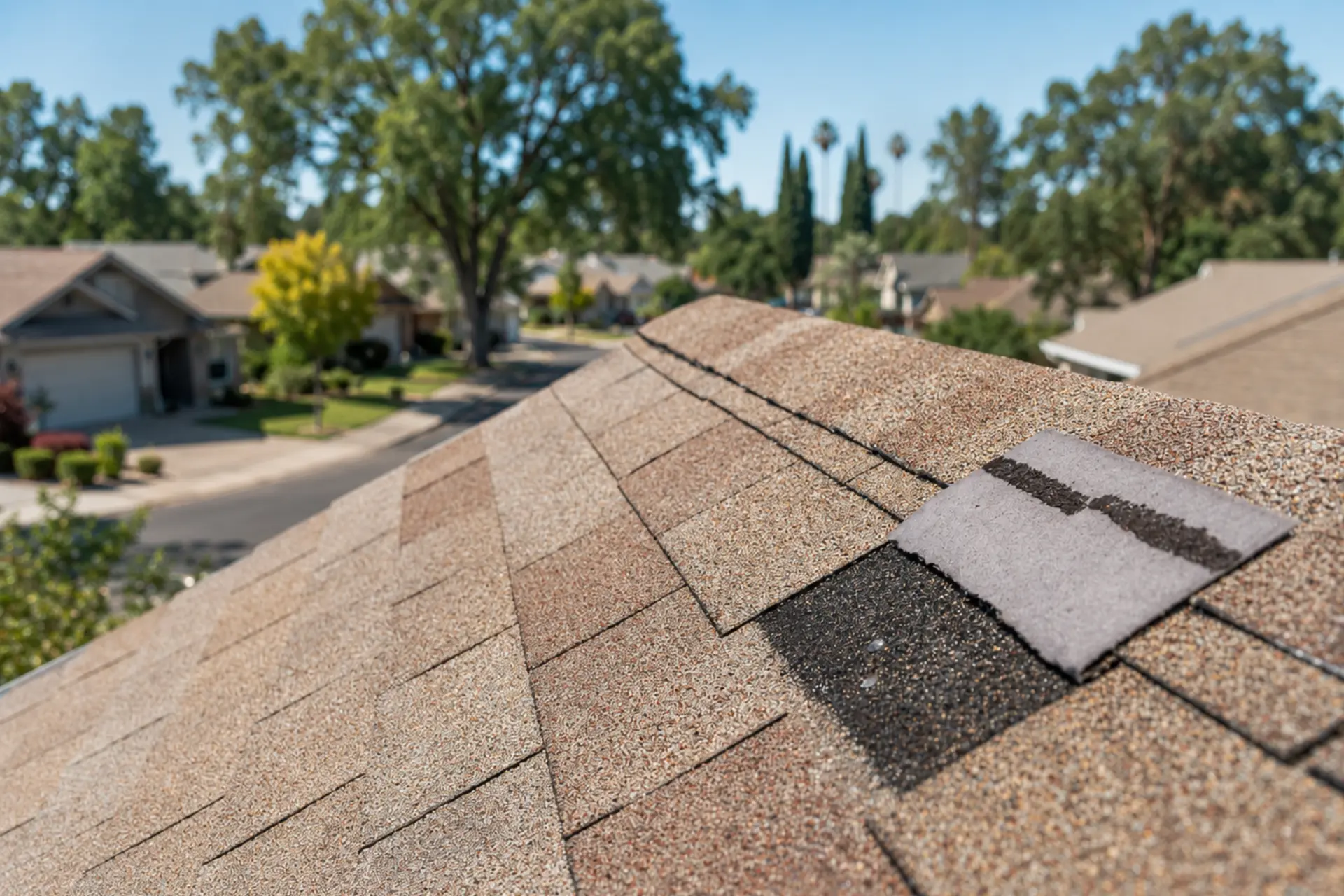
A storm rolls through the foothills corridor, and the next morning a property owner is staring at missing shingles, granule-stripped valleys, or a cracked ridge cap. Knowing how to file a roof insurance claim in California is the difference between a full replacement covered by the carrier and a denied claim that leaves the repair bill on the homeowner. Homes in El Dorado Hills and across the greater Sacramento region face hail, wind-driven rain, and adjuster inspections that routinely miss foothills-specific damage. Roof Geeks documents that damage before the adjuster arrives, giving each property owner the evidence needed to support a complete claim.
Get documentation before your adjuster arrives. The inspection step matters more than most homeowners realize. Roof Geeks, CSLB-licensed and based in El Dorado Hills, has assisted local homeowners through the claims process for years.
Key Takeaways
- California law requires your insurer to acknowledge a roof damage claim within 15 days and accept or deny it within 40 days.
- Contacting a licensed roofer before filing gives property owners documented evidence that adjusters frequently overlook on foothills roofs.
- Hail and wind damage on composition shingles in the foothills often shows as granule displacement, a failure mode that standard adjuster inspections miss.
- Your policy's ACV vs. RCV designation directly determines your settlement value, a critical factor when filing a California roof insurance claim.
- Roofing systems in High Fire Hazard Severity Zones may require California Building Code Chapter 7A compliant materials, which affects replacement scope and claim value.
Why Roof Claims in the Sacramento Foothills Get Denied
A mishandled roof claim in the foothills corridor does not just slow down repairs. It produces a denial, a reduced settlement, or a coverage dispute that leaves the property owner paying out of pocket for damage caused by someone else's weather event. The single most common cause is improper sequencing: calling the insurer before a qualified contractor has documented the damage on record. As covered in the intro, anything the adjuster misses on that first visit is difficult to add back later.
Properties across the Cameron Park area and unincorporated El Dorado County face three distinct damage seasons. Atmospheric river events from November through March drive sustained winds of 30 to 50 mph across ridge-line roofs east of Bass Lake Road. Late winter and spring hail displaces granules from composition shingles in ways a standard inspection overlooks. Summer and fall wildfire ember cast creates heat damage and membrane degradation that insurers frequently misclassify as wear.
Roof Geeks guides property owners through every stage of the claim process, from drone-based documentation and correct sequencing to insurer obligations under state law and the terminology that directly affects settlement value. What follows is what the insurer's website will not tell you, including how to file a roof insurance claim after a storm with documentation that holds up to adjuster scrutiny.
Does Homeowners Insurance Cover Roof Damage in California?
Reviewing your policy before you call is one of the most valuable steps you can take. Coverage language determines whether a storm-damaged roof pays out at full replacement value or at a fraction of it, and the difference can reach tens of thousands of dollars.
What Standard Policies Typically Cover
Most California homeowners carry an HO-3 open-peril policy, which covers sudden and accidental damage from named perils: wind, hail, falling objects, fire, and the weight of ice or snow. For foothills properties, that includes wind-driven rain intrusion during winter storms, hail impact on asphalt shingles from late-winter Sierra Nevada cold fronts, and ember or fire damage in areas carrying a CAL FIRE High or Very High Fire Hazard Severity Zone designation. Claims under an HO-3 policy are generally payable when the cause of loss is sudden, documented, and traceable to a covered peril.
What Is Usually Excluded
Deferred maintenance, gradual deterioration, improper installation, and pre-existing conditions are excluded under virtually every standard policy. An adjuster who identifies missing granules from age, failed step flashing, or cracked field tiles before the storm event will cite those conditions to reduce or deny the claim. Properties in unincorporated El Dorado County subject to WUI roofing requirements under California Building Code Chapter 7A face additional scrutiny, because a non-compliant roofing system can complicate both coverage eligibility and post-loss replacement scope.
Actual Cash Value vs. Replacement Cost Value
The ACV versus RCV distinction is where most property owners lose money. A 15-year-old composition shingle roof under an ACV policy may receive only 40 to 50 percent of current replacement cost after depreciation is applied, leaving the owner responsible for the balance. An RCV policy pays the full cost to restore the roofing system to like kind and quality, with depreciation released after the work is completed and documented.
Why You Should Contact a Roofer Before Calling Your Insurance Company
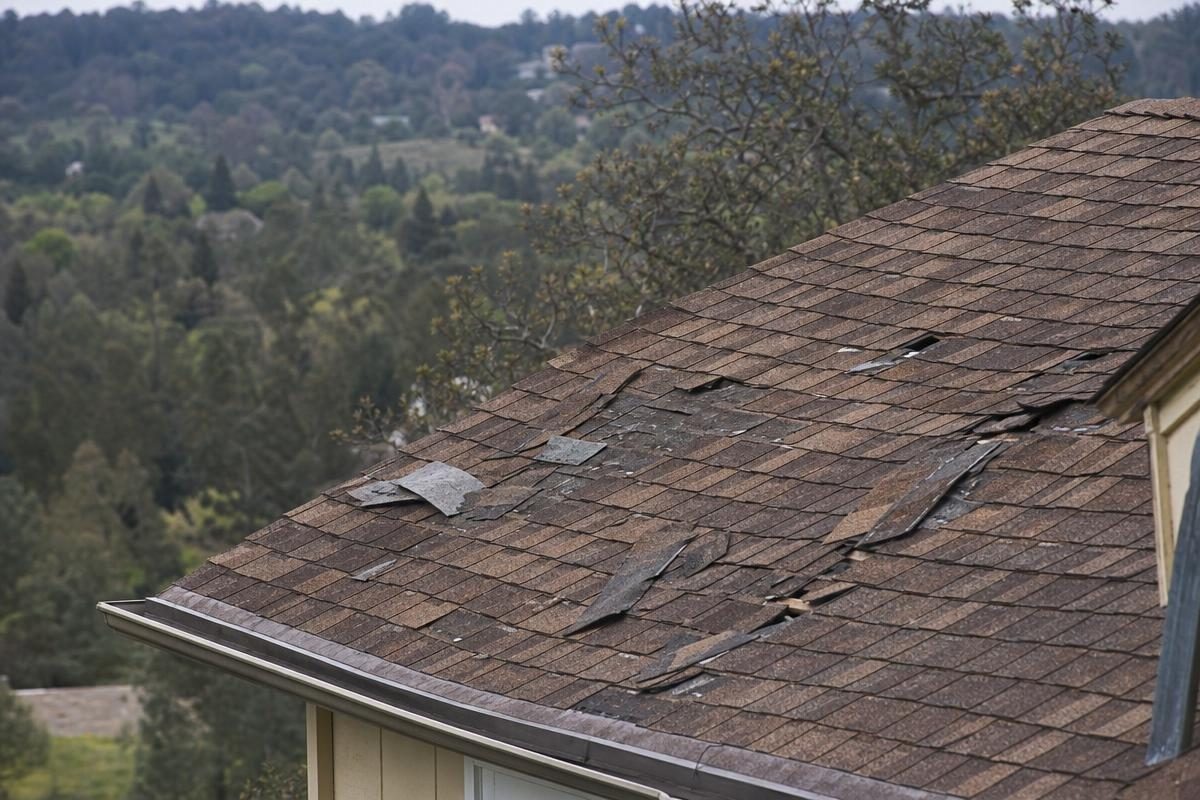
Most property owners reach for the phone and call their insurer first after a storm. That single decision hands control of the damage narrative to the adjuster. Roof Geeks performs an independent damage assessment before the adjuster ever sets foot on the property, giving the owner a documented scope of loss that defines what the claim should cover from the start.
Why Should You Get a Damage Assessment Before Filing?
Because the adjuster's first inspection report becomes the binding baseline document for your entire claim. Damage omitted from that report, particularly granule displacement on field shingles or fractured ridge caps common after foothill hail events, is hard to add once the adjuster has closed the initial file. An independent contractor scope document puts you in control before that baseline is set, and a pre-adjuster inspection consistently produces more complete settlements.
How Our Team Documents Damage for Insurance Purposes
Steep-slope roofs in hillside communities near Folsom Lake and throughout the 95762 ZIP code are frequently inaccessible by ladder alone. Our technicians use drone-assisted roof inspection to capture high-resolution aerial imagery of the full roof plane, including ridge caps, flashing seams, and valley areas that a ground-level adjuster may never see.
The documentation package includes annotated photographs identifying impact craters, granule displacement patterns, fractured tile, compromised flashing seams, and any deck substrate exposure. That package travels with the property owner into every conversation with the insurer.
Get documentation before your adjuster arrives. A contractor-prepared scope is your strongest tool for a full settlement.
Step-by-Step: How to File a Roof Insurance Claim in El Dorado Hills
The roof claim process in El Dorado Hills follows a specific sequence. Skipping steps or reversing the order is the most common reason claims are denied or underpaid before a homeowner realizes what went wrong.
Step 1: Mitigate Further Damage Immediately
California homeowners policies require the property owner to prevent additional damage after a covered event. Tarping open penetrations, boarding broken skylights, and removing standing debris are the owner's obligation. Failure to act gives the insurer grounds to deny any incremental water intrusion that occurs after the storm.
Step 2: Document the Damage Before Anyone Accesses the Roof
Ground-level photo and video documentation with date stamps establishes the loss timeline before any material is disturbed. Capture interior evidence as well: ceiling staining, wet attic insulation, and fascia water marks all support the claim. On the steep-slope hillside properties common in the 95762 area, drone inspection is often the only way to document ridge and upper-field damage without disturbing the evidence.
Step 3: Review Your Policy Before You Call
Pull the declarations page and identify four things: named perils covered, deductible type (flat dollar versus percentage of dwelling coverage), whether the policy pays actual cash value or replacement cost value, and any roof-age or cosmetic-damage exclusions. These terms directly control the settlement amount before the adjuster ever visits the property.
Step 4: Schedule an Independent Contractor Assessment
A contractor inspection before the adjuster visit creates an independent scope of damage that can be compared line by line against the insurer's Xactimate report. Our technicians document granule displacement, step flashing separation, and counter-flashing failures that standard inspections frequently miss on foothills properties. The process is the same whether the property is in the El Dorado Hills corridor or filing a roof insurance claim after a storm in Shingle Springs.
Step 5: File the Claim with Your Insurer
Contact your insurer with the documented loss date, the cause of damage, and your contractor's preliminary scope. Under California Insurance Code Section 2071, the insurer must acknowledge the claim within 15 calendar days of receipt and accept or deny it within 40 days.
Step 6: Be Present and Prepared for the Adjuster Inspection
The property owner should be on site with the contractor's written scope and photo documentation in hand when the adjuster arrives. Any discrepancy between the adjuster's scope and the contractor's findings should be noted in writing before the adjuster leaves.
Step 7: Review the Adjuster's Estimate Line by Line
The adjuster's Xactimate report is the baseline settlement document. If the insurer's scope is materially lower than the contractor assessment, the property owner has the right to request a re-inspection or invoke the appraisal clause under California's claims settlement regulations.
California-Specific Rules That Affect Your Roof Insurance Claim

Filing in California is not the same as filing in other states. State law imposes specific deadlines and conduct standards on insurers that every foothills property owner should understand before the process begins.
Insurer Response Deadlines Under California Law
Under the California Department of Insurance and Title 10, Chapter 5, Subchapter 7.5, your insurer must acknowledge your claim within 15 calendar days of receipt. From the date you submit a complete proof of loss, the insurer has 40 days to accept or deny the claim, and 30 days to issue payment after a settlement agreement is reached.
Property owners who experience delays beyond these thresholds have standing to file a formal complaint with the California Department of Insurance, which enforces these timelines. A documented complaint creates a record that can accelerate insurer action.
The Fair Claims Settlement Practices Regulations
These regulations prohibit insurers from misrepresenting policy provisions, conducting an inadequate investigation, or settling a claim for materially less than the amount owed. If an adjuster's estimate uses labor and material rates that do not reflect current local market costs, that estimate can be challenged.
Our technicians document current local material and labor pricing to support that challenge. A written contractor estimate referencing actual supplier costs in the 95762 market gives the property owner a factual basis to dispute a low settlement before accepting it.
How California's WUI Designation Affects Coverage and Rebuilding Requirements
Large portions of unincorporated El Dorado County carry a High or Very High Fire Hazard Severity Zone designation from CAL FIRE. Any roof replacement on a parcel in those zones must comply with California Building Code Chapter 7A, which typically requires a Class A fire-rated roofing system. Verify current permit requirements with the El Dorado County Building Services office before finalizing scope.
That code-upgrade requirement can push replacement costs significantly above what a standard estimate accounts for. Owners should document the compliance requirement in writing and present it to the insurer as a covered code-upgrade cost. Read more about WUI roofing requirements in El Dorado County to understand which materials qualify and what documentation the insurer will need.
California law gives your insurer strict deadlines. If your claim is stalled or your estimate looks low for the local market, call us at (916) 888-7663 before you sign anything.
Key Insurance Terms Every El Dorado Hills Homeowner Should Know Before Filing
Misreading a single policy term can cost a property owner thousands of dollars. Understanding how these terms function in practice, before the adjuster arrives, puts the owner in a stronger position throughout the process.
Deductible, Depreciation, and Recoverable Depreciation
A percentage-based deductible is calculated against the insured value of the home, not the repair cost. On a property insured at $600,000 with a 1% wind or hail deductible, the owner absorbs the first $6,000 of any claim before coverage applies.
Depreciation reduces the initial payout to actual cash value. On a replacement cost value policy, the withheld depreciation becomes recoverable once the work is completed and documented, but most California policy forms impose a completion window of 12 to 24 months. Missing that window forfeits the withheld amount permanently, which is why scheduling repairs promptly matters as much as filing correctly. If you are unsure whether repair or full replacement is warranted, our post on how homeowners can tell the difference between repair and replacement covers the key indicators.
Proof of Loss, Scope of Work, and the Appraisal Clause
A Proof of Loss is a formal sworn statement itemizing all claimed damages and their assigned values. Most California insurers require it within a specified timeframe after the loss, and submitting an incomplete or inaccurate Proof of Loss can delay or reduce payment.
The Appraisal Clause is a formal dispute resolution mechanism available when the owner and insurer disagree on the value of a covered loss. Each party selects an independent appraiser, and those two appraisers jointly select an umpire whose decision on disputed items is binding. Invoking this clause requires specific written notice under the policy terms, and doing so without a documented scope of work from a qualified roofing contractor weakens the owner's position considerably.
Common Mistakes That Get Roof Insurance Claims Denied or Underpaid
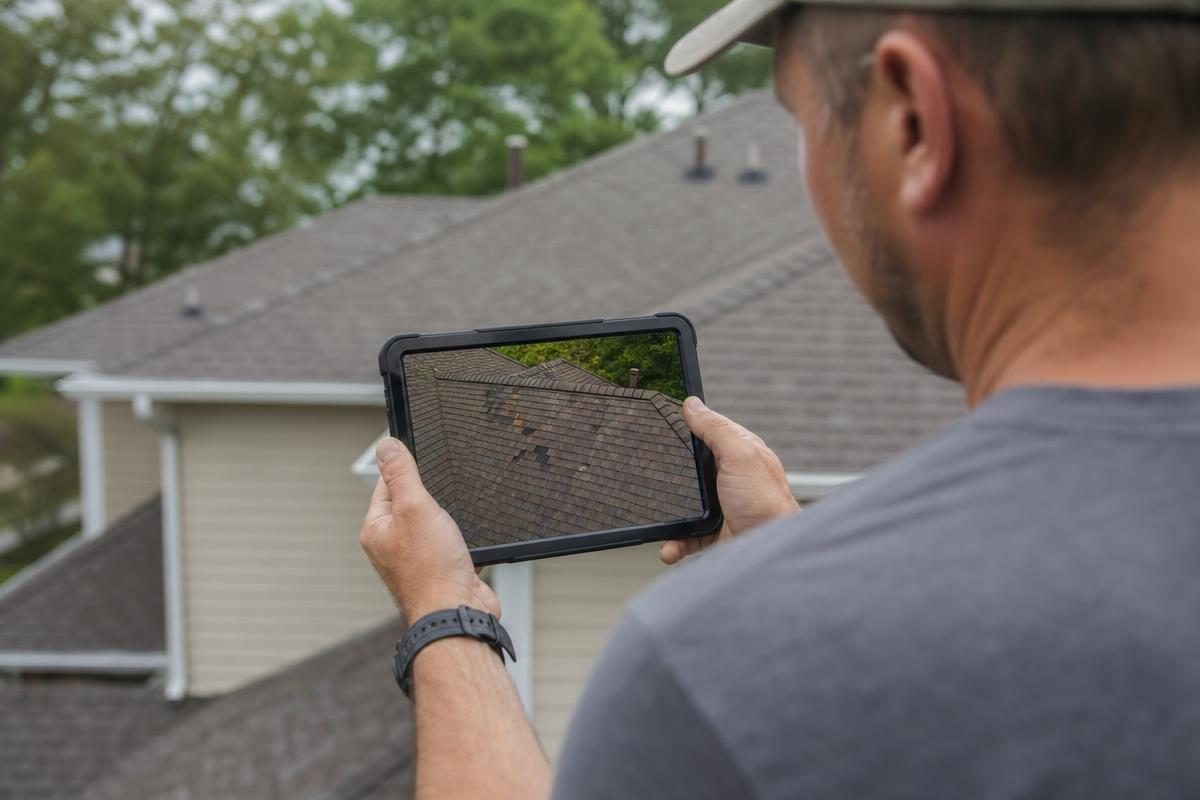
Most denied or underpaid claims trace back to three avoidable errors: late reporting, incomplete documentation, and accepting an initial settlement without scrutiny. Each mistake has a direct financial consequence that cannot easily be reversed after the fact.
Delayed Reporting and the Prompt Notice Requirement
California courts evaluate "prompt notice" based on when the owner knew or reasonably should have known about the damage, not when repairs became urgent. A roof damaged during a January storm and reported in April gives the insurer a legitimate late-notice coverage defense regardless of how severe the underlying damage is.
Foothills properties in the 95762 ZIP code are particularly exposed to this risk because storm damage to steep-slope roofs often stays invisible at ground level for weeks. We recommend scheduling a post-storm inspection within days of any significant weather event, not after visible interior symptoms appear.
Incomplete Documentation and Adjuster-Only Reliance
Standard adjuster inspections run 30 to 60 minutes and focus on surface-visible damage. Underlayment degradation, deck substrate softening, attic insulation saturation, and ventilation component failures are routinely missed because they require attic access and drone-assisted evaluation to document properly.
Our inspectors use drone imaging and full attic access to capture damage at every layer of the roofing system, producing a written scope that supports a supplemental payment request if the initial settlement falls short of actual replacement cost.
Accepting the First Settlement Offer Without Review
Insurers are not required to inform owners that a first settlement offer is disputable. Homeowners who sign without review frequently forfeit recoverable depreciation holdbacks and code-upgrade costs, including any Title 24 or fire-zone compliance upgrades required at replacement. A contractor-prepared written scope compared line by line against the adjuster's estimate is the most direct way to identify underpaid line items before any release is signed.
El Dorado Hills Roof Damage: Local Conditions That Drive Claims
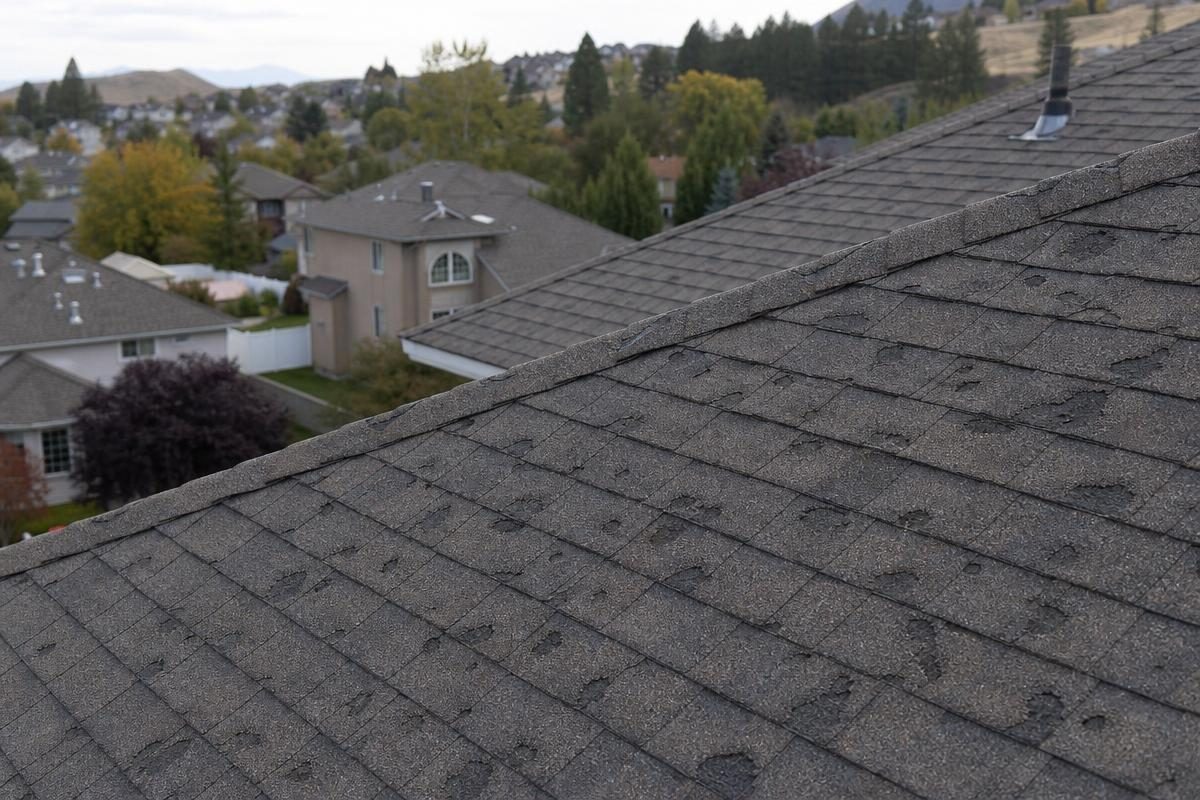
Properties in the foothills corridor face a combination of weather stressors that most standard inspections are not designed to catch. Ridge-line exposure, foothill hail patterns, wildfire ember cast, and extreme thermal cycling each degrade roofing systems in ways that require trained eyes and, often, drone equipment to document accurately.
Atmospheric River Events and Wind-Driven Rain
Winter storms deliver sustained winds of 30 to 50 mph, with gusts exceeding 60 mph on exposed ridge-line properties east of the Bass Lake Road corridor. That wind load forces water past compromised step flashing and deteriorated ridge cap shingles, creating interior water intrusion that does not always appear until days after the storm passes.
Our technicians document every point of entry where wind-driven rain has breached the roofing system, producing a written scope that supports the owner's claim rather than leaving gaps for an adjuster to dispute.
Hail Exposure in the Sacramento Foothills
The Cameron Park area and surrounding communities experience hail most frequently in late winter and spring, when cold fronts interact with the terrain rising toward the Sierra Nevada range. Hail impact on composition shingles produces granule displacement and fiberglass mat bruising that is invisible from ground level and rarely causes immediate leaking, which means the filing window can close before the owner realizes damage occurred.
Understanding whether that damage warrants full replacement or targeted repair is a critical early step; our guide on how Sacramento homeowners can tell the difference between repair and replacement covers the key indicators.
Wildfire Ember Cast and Thermal Cycling
During fire weather conditions, ember cast can cause localized heat damage to sealants and flashing components at roof penetrations, damage that appears minor on the surface but compromises watertight integrity over subsequent rain seasons. Properties in designated fire hazard zones carry additional compliance obligations at replacement; see our overview of WUI roofing requirements in El Dorado County for details.
Summer temperatures that routinely exceed 100°F combined with winter lows create thermal cycling stress that accelerates cracking in field tiles and sealant failure at penetrations, deterioration that accumulates across seasons and is rarely captured in a single adjuster visit. Folsom Lake's proximity also raises ambient moisture on north-facing slopes, accelerating moss and underlayment breakdown.
Frequently Asked Questions
How Long Does a Homeowner Have to File a Roof Insurance Claim in California?
California has no single statutory deadline for filing a homeowners insurance claim, but two policy provisions create real urgency. Most policies include a suit limitation clause requiring legal action within one year of the date of loss, and virtually all policies require "prompt notice" of damage. Waiting 30 to 60 days after a documented weather event creates late-notice exposure that insurers routinely use to reduce or deny a claim. Document damage immediately and contact your insurer as soon as a contractor assessment is complete.
Will Filing a Roof Insurance Claim Raise My Homeowners Insurance Premium?
Filing a claim can trigger a premium increase at renewal, and California insurers may non-renew a policy after two or more claims within a three-year period under certain underwriting guidelines. For marginal damage, property owners in the Shingle Springs and Rescue area should weigh the net claim value against the deductible and the likely premium impact before filing. If repair costs fall close to the deductible threshold, a contractor assessment helps establish whether the damage justifies a claim before any contact with the insurer.
What Is the Difference Between an Insurance Adjuster and a Public Adjuster?
An insurance adjuster is employed by or contracted to the insurer and represents the insurer's interests during the inspection. A public adjuster is an independent licensed professional hired by the property owner, typically charging 10 to 15 percent of the final settlement in California. Our team functions as neither. We provide technical documentation, including drone reports, annotated photographs, and a written scope of work, to support the owner's claim, but formal policy negotiations remain outside our role as a roofing contractor.
Can Your Team Meet with My Insurance Adjuster During the Inspection?
Yes. Our technicians are available to be present during the adjuster inspection once our assessment is complete. Having a contractor on site is one of the most effective ways to ensure that granule displacement, step flashing separation, and ridge damage are captured in the adjuster's scope rather than omitted. Schedule the adjuster appointment after our assessment so our documented findings are already in hand when the adjuster arrives.
What Happens If My Insurance Claim Is Denied?
A denial is not a final determination. California insurers are required to provide a written explanation citing the specific policy provision or exclusion supporting the denial. Options available to the property owner include requesting a re-inspection, submitting additional contractor documentation, invoking the appraisal clause if one exists in the policy, or filing a complaint with the California Department of Insurance if the denial appears to conflict with the state's Fair Claims Settlement Practices Regulations. Additional contractor documentation from our team is often the most direct path to a successful re-review.
Does Your Team Handle the Insurance Paperwork, or Is That My Responsibility?
Formal claim filing, proof of loss submissions, and all direct policy communications are the property owner's responsibility. Our team provides the technical record: drone inspection reports, annotated photographs, material specifications, and a written scope of work that documents every point of entry for water intrusion. That documentation supports the owner's position throughout the process. For context on how roofing scope affects claim outcomes, see our guide on how homeowners can tell the difference between repair and replacement.
A storm damage assessment from our team gives you a contractor-documented scope of damage before your adjuster sets foot on the property. That documentation is the difference between a settlement that covers your full replacement cost and one that does not. Call Roof Geeks at (916) 888-7663 or visit our contact page to schedule your assessment. Our El Dorado Hills office serves the greater Sacramento foothills communities, and our team is available to be present during your adjuster inspection once the assessment is complete.
Ready to Get Started with Roof Geeks?
Call (916) 888-7663 to speak with our team directly. We're ready to answer your questions, walk you through your options, and help you find the right solution for your needs. Whether you're just starting to plan or ready to move forward, we'll make the process simple and stress-free.
Reach out today and let's talk about how we can help.