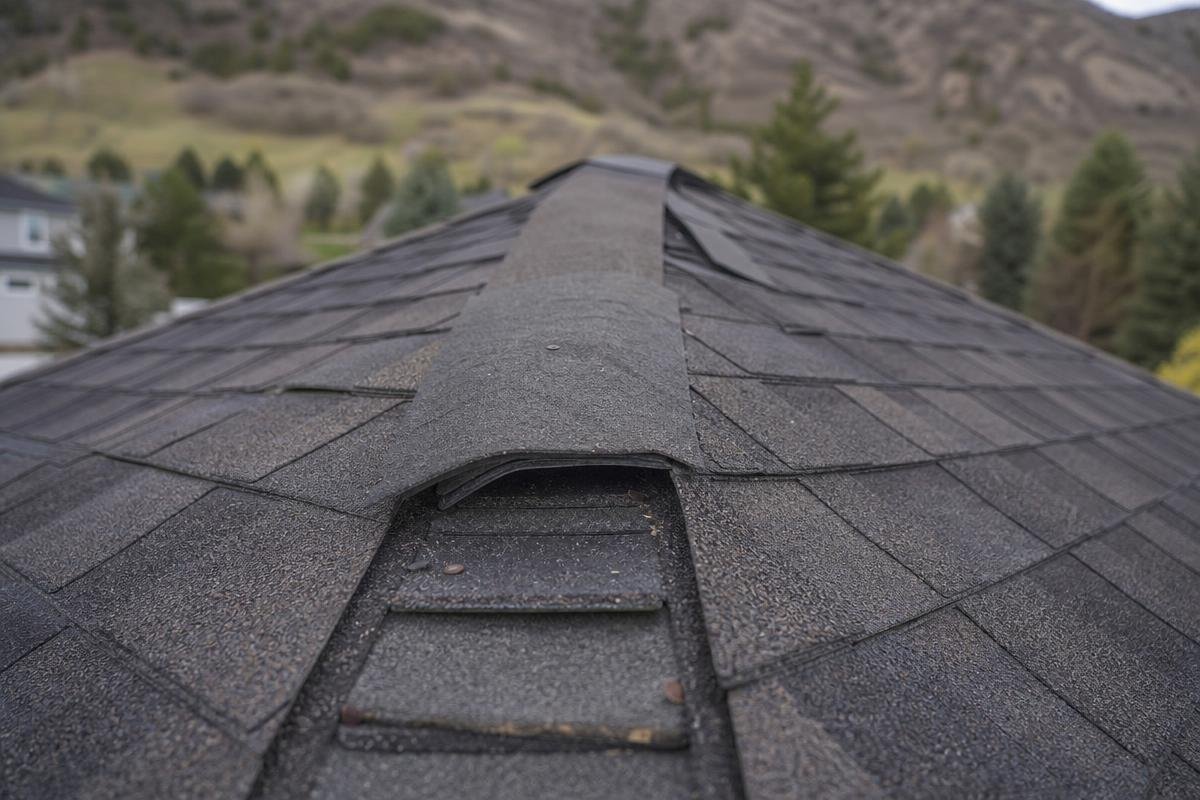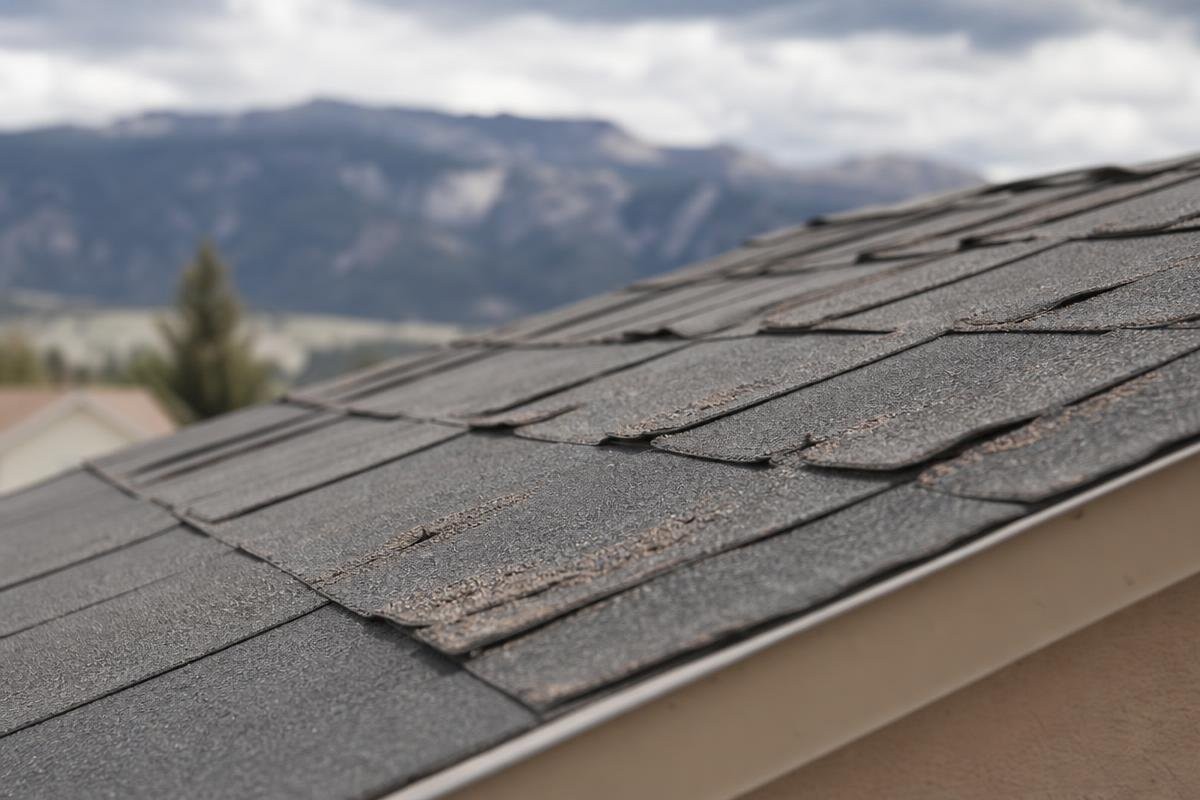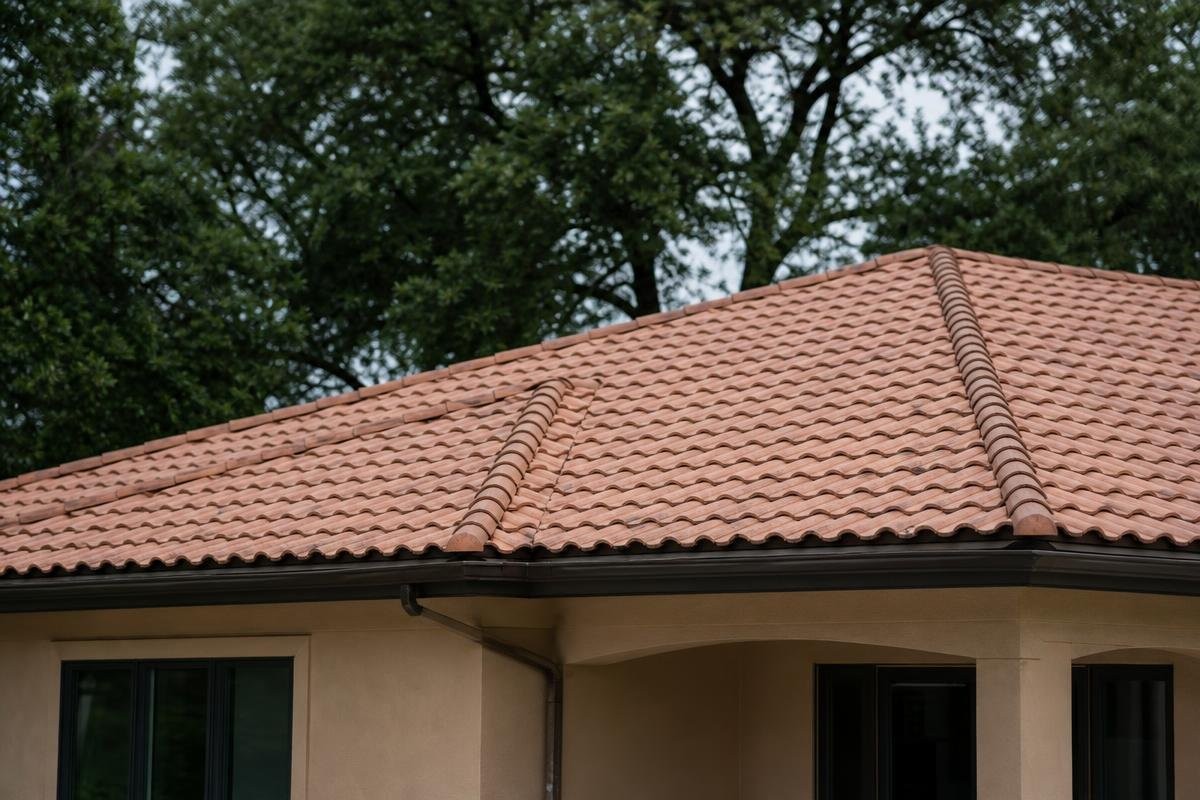
Hiring the wrong roofer in Shingle Springs can mean a failed permit inspection, a voided manufacturer's warranty, or a roof assembly that doesn't meet El Dorado County's WUI fire-rating requirements. Knowing the right questions to ask a roofer before signing a contract is the single most effective way to protect your property and your investment. Roof Geeks is based in El Dorado Hills and serves the Sierra foothills, so we know exactly what separates a qualified installer from a liability risk on a 95682 property. You can verify our standing yourself:our CSLB C-39 roofing license number and current insurance details are available on request, and we expect every homeowner to run that same check on any contractor they consider.
Bring this checklist to your next roofing conversation.
Key Takeaways
- Always verify a roofer's California contractor license number and current liability insurance before signing any contract.
- Shingle Springs falls within El Dorado County's WUI zone, so roofing material selection must meet Class A fire-rating requirements under Title 24.
- The right questions to ask a roofer include permit responsibility, manufacturer warranty terms, and subcontractor use.
- Summer heat above 100°F in the Shingle Springs area accelerates shingle degradation, making installation quality and material specs critical.
- A signed contract should specify materials by manufacturer name, project timeline, cleanup terms, and the permit inspection process.
Why the Right Questions Protect Your Investment
Signing a roofing contract without asking the right questions costs homeowners in the Sierra foothills far more than a bad experience. Unlicensed labor, voided manufacturer warranties, and failed permit inspections can produce five-figure out-of-pocket losses on a roof that should have lasted 30 years.
Properties in the 95682 zip code sit inside the State Responsibility Area under CAL FIRE jurisdiction, which means roofing assemblies must meet Class A fire ratings under Title 24 and the 2022 California Residential Code as locally amended by El Dorado County. Summer temperatures that regularly exceed 100°F along the Green Valley Road corridor, seasonal high winds, and wildfire ember exposure create conditions that out-of-area crews are not equipped to address. Understanding the WUI roofing requirements in El Dorado County before hiring a contractor is the first step toward protecting a property correctly.
This guide covers nine specific questions every property owner should ask before signing anything. The topics include CSLB licensing, insurance verification, manufacturer certifications, warranty tiers, flashing scope, tear-off logistics, crew oversight, ventilation assessment, and insurance claim support. Each question includes enough technical context to evaluate the contractor's answer, not just recite the question.
Why Shingle Springs Homeowners Face Unique Roofing Risks
The wildland-urban interface designation that covers Shingle Springs changes nearly every decision a roofing contractor must make. Communities strung along Bass Lake Road and the surrounding foothill ridgelines have lived through active fire seasons, and that history is written directly into local code enforcement. A roofer unfamiliar with WUI zone requirements will select materials, underlayment, and installation methods that fail the county Building Department's permit inspection, voiding manufacturer warranties before the first rain season arrives.
Heat Cycling, Ember Exposure, and Fire Classification
The triple-digit summer heat referenced above drives thermal cycling that breaks down standard asphalt shingles far faster than installations in coastal or valley markets. The same shingle expands and contracts through a wide daily temperature swing, fatiguing sealant strips and loosening fasteners over time. Qualified contractors working in this area should specify SBS-modified or IR-reflective shingles that meet Title 24 cool-roof requirements and carry a Class A fire rating covering the full assembly, including decking, underlayment, and field material. Homeowners can review fire-resistant roofing options for Shingle Springs homes to understand which assemblies satisfy both CAL FIRE and Title 24 requirements before a contractor conversation begins.
The dense oak and pine canopy surrounding foothill properties produces ember cast during fire events, making roofing material selection a life-safety issue, not only a code compliance matter.
Why Generic Contractor Advice Fails Here
National roofing guides and out-of-area contractors routinely omit the locally adopted 2022 CRC amendments, State Responsibility Area compliance steps, and post-fire-season insurance documentation requirements specific to this jurisdiction. A contractor who misses the county's permit timeline or applies the wrong code version triggers inspection failures that delay project completion and can invalidate the manufacturer's warranted coverage entirely.
Question 1: Are You Licensed by the California Contractors State License Board?
Any roofing project valued at $500 or more in combined labor and materials requires a contractor holding a CSLB C-39 Roofing classification under state law. Hiring a contractor without that classification eliminates your ability to file a CSLB complaint, voids the contractor's bond, and can invalidate a homeowner insurance claim if the insurer determines the work was performed without proper licensure.
Ask for the license number verbally before any other conversation. Then verify it independently at cslb.ca.gov, which shows current license status, C-39 classification, bond status, and any disciplinary history in under two minutes. A contractor who hesitates to provide that number on the spot is a disqualifying signal, full stop.
Roof Geeks holds an active CSLB C-39 license, and we encourage every property owner across the foothills to run that verification before signing any contract. For homeowners in wildland-urban interface zones, where local regulatory scrutiny is heightened, confirming a contractor's license status is the first item on any responsible roofing contractor checklist.
Question 2: Can You Provide Proof of General Liability and Workers' Compensation Insurance?
An uninsured crew on a foothill property creates a direct financial risk for the property owner. If a laborer falls from a roof and the contractor carries no workers' compensation coverage, the homeowner's personal liability policy becomes the first line of exposure, and most residential policies are not structured to absorb a serious injury claim from a third-party construction worker.
General liability insurance covers structural damage caused by the crew during the project, such as a tool dropped through a skylight or water intrusion during tear-off. Every property owner hiring a roofing contractor should request a Certificate of Insurance before work begins. That COI must name the property address, show general liability limits of at least $1 million per occurrence, which is standard practice for California roofing projects, and confirm that the workers' compensation policy is active on the project start date, not just at the time of the estimate. A policy that lapses between signing and mobilization provides no protection once our crews arrive on site.
This is a non-negotiable item on any roofing contractor checklist. Request the COI directly from the insurer, not a copy handed over by the contractor.
Question 3: Do You Hold Any Manufacturer Certifications, and What Warranties Do They Cover?
A standard manufacturer warranty covers material defects only, and it is voided the moment installation deviates from published specs. Skipped starter strips, incorrect nail patterns, or shingles applied outside the manufacturer's temperature range all eliminate coverage before the first rainstorm hits.
Manufacturer Warranty vs. Workmanship Warranty
A manufacturer warranty and a workmanship warranty are two separate documents covering two separate failure types. The manufacturer covers defective material; the contractor covers installation errors, and that workmanship warranty is only as durable as the contractor's business existence.
Enhanced system warranties change that equation significantly. Programs like GAF System Plus or Owens Corning Platinum Protection extend coverage up to 50 years and cover both material and labor, but they require verified certified installer status to issue. In a foothill climate where the daily heat swing accelerates thermal cycling and shingle degradation, that extended coverage carries real value. Ask directly: is this a standard limited warranty or an enhanced system warranty, and what certification is required to issue it?
What Certifications Signal About Installation Quality
Certification programs like GAF Master Elite and Owens Corning Platinum Preferred are not self-reported credentials. Manufacturers verify minimum installation volume, completed training, and clean complaint records before granting status, and they can confirm a contractor's standing by name.
For properties in WUI zones, material selection directly affects warranty eligibility, since the Class A fire-rated assemblies required under Title 24 must be installed to manufacturer specs to maintain coverage. Our team holds verified manufacturer certifications and can issue enhanced system warranties on qualifying roofing systems. For more on how material choices intersect with local fire codes, see our guide on best roofing materials for Shingle Springs homes.
Question 4: Will You Pull the Required El Dorado County Building Permit?
A roof replacement completed without a building permit creates a material defect disclosure obligation at resale and can trigger a stop-work order, mandatory tear-off, and re-inspection costs if discovered during a complaint or insurance inspection. Any contractor who offers to skip the permit to reduce cost is transferring that legal and financial risk entirely to the property owner.
Roof replacements in the 95682 zip code fall under the locally amended 2022 CRC, including fire-rating requirements enforced at the permit inspection stage for properties within the interface zone. A permit pulled in the homeowner's name by an unlicensed contractor is a recognized fraud pattern; the permit must be issued in the licensed contractor's name. Our team pulls all required permits through the county Building Department before project commencement, and our installers schedule inspections at each required phase so the roofing system carries a clean permit history.
Request a free WUI-compliant roof inspection and get your permit and fire-rating questions answered on site.
Question 5: Will You Replace the Flashing, Drip Edge, and Underlayment, or Just the Field Material?
Most water intrusion in a re-roofed system enters through flashing failures, not through failed field shingles. Step flashing at wall intersections, counter-flashing at chimney bases, pipe boots at plumbing penetrations, and drip edge at eave and rake edges are statistically higher-risk components than the shingles installed over them, and a contractor who leaves those original components in place is handing the property owner a future leak on a new-shingle timeline.
Residential Code section R903.2 requires flashing at all roof-to-wall intersections, and most shingle manufacturer specs require new drip edge and underlayment as a condition of warranty coverage. Our team replaces step flashing, counter-flashing, pipe boots, drip edge, and underlayment as standard scope on every full roof replacement, because installing new field material over aged flashing components defeats the purpose of a full system replacement. The foothill heat swing accelerates pipe boot and counter-flashing seal failure faster than coastal installations, making component-level replacement even more critical here. Before signing any contract, ask the contractor to confirm in writing which components are included in scope and which are excluded, and review our guide to best roofing materials for Shingle Springs homes to understand how material selection affects those specs.
Not sure if your contractor's bid covers every component? Call our team at (916) 888-7663 and we'll walk through the scope line by line before you sign anything.
Question 6: How Will You Handle Tear-Off, Debris Disposal, and Site Protection?
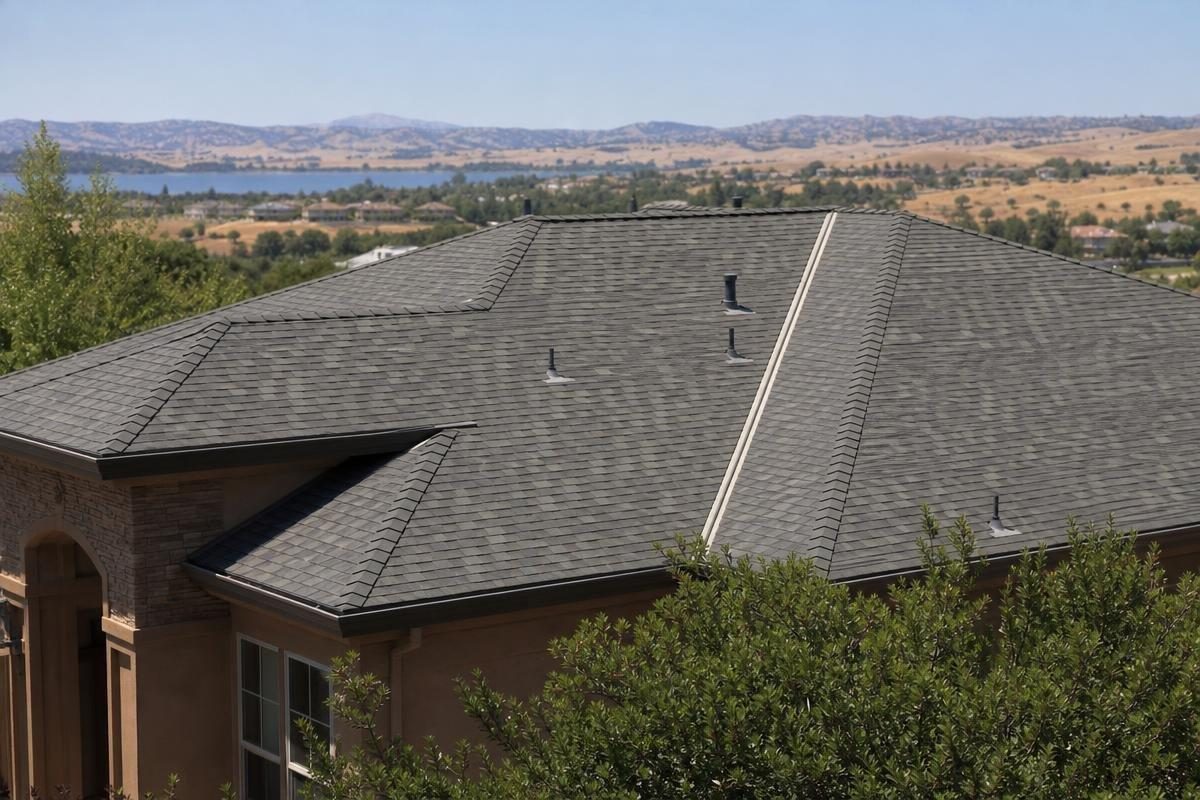
A single-story roof replacement in the Sierra foothills generates two to four tons of tear-off debris, including old shingles, deteriorated underlayment, scattered nails, and damaged decking boards. Contractors hauling that volume in open pickup trucks risk vehicle code violations and may offload at unpermitted sites, a problem that traces legal liability back to the property owner as the waste generator of record.
Professional crews use roll-off containers positioned with plywood pads underneath to protect exposed aggregate driveways and pavers from surface damage, then transport all material to a licensed transfer station. The canopy common to foothill properties increases debris scatter distance significantly, making perimeter tarps over landscaping, HVAC equipment, and parked vehicles a non-negotiable part of site setup, not an optional courtesy. Before leaving each day, our crews run a magnetic nail sweep across all ground surfaces to collect fasteners that would otherwise end up in tires or bare feet. Any contractor you are vetting should be able to describe each of these steps without hesitation; if they cannot, that gap belongs on your roofing contractor checklist as a disqualifying answer when you vet a roofer before signing.
Question 7: Who Will Be on the Roof, Your Employees or Subcontractors?
Subcontracting is common in roofing and not automatically a red flag, but the arrangement creates real liability exposure if it is not structured correctly. A contractor who sends a subcontracted crew to a steep-slope foothill property without a named on-site supervisor, and without confirming those workers are covered under an active workers' compensation policy, leaves the property owner holding the risk if an injury occurs on that roof.
Ask directly: "If subcontractors are used, are they covered under your workers' compensation policy, and who is the named supervisor responsible for quality control on site?" A contractor who cannot answer both parts of that question with specifics should be disqualified before signing anything. Interface-zone job sites demand experienced, consistently supervised crews, not rotating labor with no accountability to the primary contractor.
Our team uses its own trained installation crews with direct supervision on every project. Every installer who arrives at a property in our service area is employed by us, covered under our insurance, and answerable to a named foreman on site. That is how we maintain quality control from first shingle to final inspection.
Question 8: Does the Estimate Include a Ventilation Assessment?
A contractor who replaces field material without auditing existing intake and exhaust ventilation is leaving one of the primary causes of premature roofing system failure completely unaddressed. Attic temperatures in foothill homes regularly exceed 150°F during peak heat, accelerating asphalt shingle degradation from the underside and voiding manufacturer-specified warranties that require minimum ventilation ratios to remain valid.
CRC Section R806 and the state energy code set a minimum net free area of 1 square foot per 150 square feet of attic floor area, or 1:300 when a vapor retarder is present. Any roofing contractor checklist worth following should include this calculation as a standard pre-replacement step, not an optional add-on, because an under-ventilated attic shortens shingle life regardless of material grade or installation quality.
Our team conducts a full ventilation assessment on every roof inspection, calculating existing net free area across all intake soffit vents and exhaust points against total attic square footage. Where ratios fall below code minimums, our installers recommend ridge vent additions, baffled soffit vent upgrades, or power ventilator installations before new material goes down. Knowing what to ask before roof replacement starts with this question, and our written estimates document ventilation findings in full.
Question 9: How Do You Handle Storm Damage Documentation and Insurance Claim Support?
Foothill weather patterns bring hail, high-wind events, and debris impact from the tree canopy that can fracture shingles, displace granules, and lift tabs across multiple roof planes. A contractor who cannot produce a written damage assessment, organized photo documentation by damage type and location, and a scope of loss mapped to adjuster line items leaves the property owner to navigate a complex insurance claim alone. For a full walkthrough of what that process involves, see our guide on how to file a roof insurance claim in Shingle Springs after a storm.
Ask any contractor you are considering whether they use drone-assisted assessments. Drone imagery produces high-resolution documentation of every roof plane with damage annotated by type, including impact fractures, granule displacement, and compromised flashing, and that documentation should be formatted for Xactimate, the estimating platform most major insurers use to evaluate scope of loss. A report that does not align with Xactimate line items creates friction with adjusters and delays claim approval.
Adjuster presence is a direct test of a contractor's commitment to full claim support. Our technicians attend every adjuster inspection, walk each damage point on record, and advocate for a scope that reflects actual replacement requirements. Any roofing contractor who declines to attend that meeting is not providing full claim support, and that gap can cost a property owner thousands in underpaid settlements.
What Are the Most Important Questions to Ask a Roofer in Shingle Springs?
If you take nothing else into your next contractor conversation, ask these:
- What is your CSLB C-39 license number, and can I verify it at cslb.ca.gov?
- Will you provide a Certificate of Insurance showing active general liability and workers' compensation?
- Which manufacturer certifications and warranty tier apply to my roof?
- Will you pull the El Dorado County permit in your own name?
- Does your scope include new flashing, drip edge, and underlayment, or only field shingles?
- Will the assembly meet Class A fire rating and Title 24 requirements for my WUI property?
- Who supervises the crew on site, and does your estimate include a ventilation assessment?
Frequently Asked Questions
How do I verify a California roofing contractor's license?
Go to cslb.ca.gov and enter the contractor's name or license number. Within two minutes, the search results will show the C-39 roofing classification, active or inactive status, bond status, and any disciplinary actions or prior complaints on record.
A valid C-39 license is the minimum required for roofing work in this state. If a contractor cannot provide a license number before the first conversation ends, stop there.
What should a roofing contract include before I sign it?
A complete contract must include the contractor's CSLB license number, certificate of insurance details, a line-item scope of work naming specific materials by manufacturer and product line, the permit number or a written commitment to pull one, a payment schedule tied to project milestones, and warranty terms covering both materials and workmanship. Contracts missing any of those items leave the property owner exposed if installation errors or material defects surface later.
When comparing three written estimates, do not compare total price alone. Flashing replacement, drip edge inclusion, and underlayment specification are the most common scope variables that separate a thorough bid from a stripped-down one. Our guide to roofing materials for Sierra foothills homes covers what those line items should specify for properties in the interface zone.
Does Roof Geeks offer free roof inspections in Shingle Springs?
Our team conducts drone-assisted inspections for properties throughout the Sierra foothills, which allows our technicians to document storm damage, assess field material condition, and identify flashing failures without unnecessary foot traffic on a compromised roofing system. If you need documentation ready before an insurance adjuster arrives, that inspection can be scheduled quickly through roofgeeksca.com.
Our technicians will also tell a property owner when no work is needed. If a roofing system is sound, we say so. If you want a second opinion on an estimate already in hand, or need storm damage documented before a claim is filed, read our overview of filing a roof insurance claim after a storm and then call us directly.
Before signing any roofing contract in Shingle Springs or anywhere across our foothill service area, run every contractor through these nine questions. A qualified contractor answers all of them without hesitation. Call Roof Geeks at (916) 888-7663 to schedule. Our team is based in El Dorado Hills, serves the Sierra foothills, and will tell you exactly what your roof needs, including when that answer is nothing.
Ready to Get Started with Roof Geeks?
Call (916) 888-7663 to speak with our team directly. We're ready to answer your questions, walk you through your options, and help you find the right solution for your needs. Whether you're just starting to plan or ready to move forward, we'll make the process simple and stress-free.
Reach out today and let's talk about how we can help.